Things to Do in Morocco: 15 Experiences for All Five Senses
Spice souks, tanneries, mint tea, hammams and the silence of the Sahara. The Morocco you feel, not just the one you photograph.
 By Bijan Paul, founder & tour leader
Updated · 10 min read
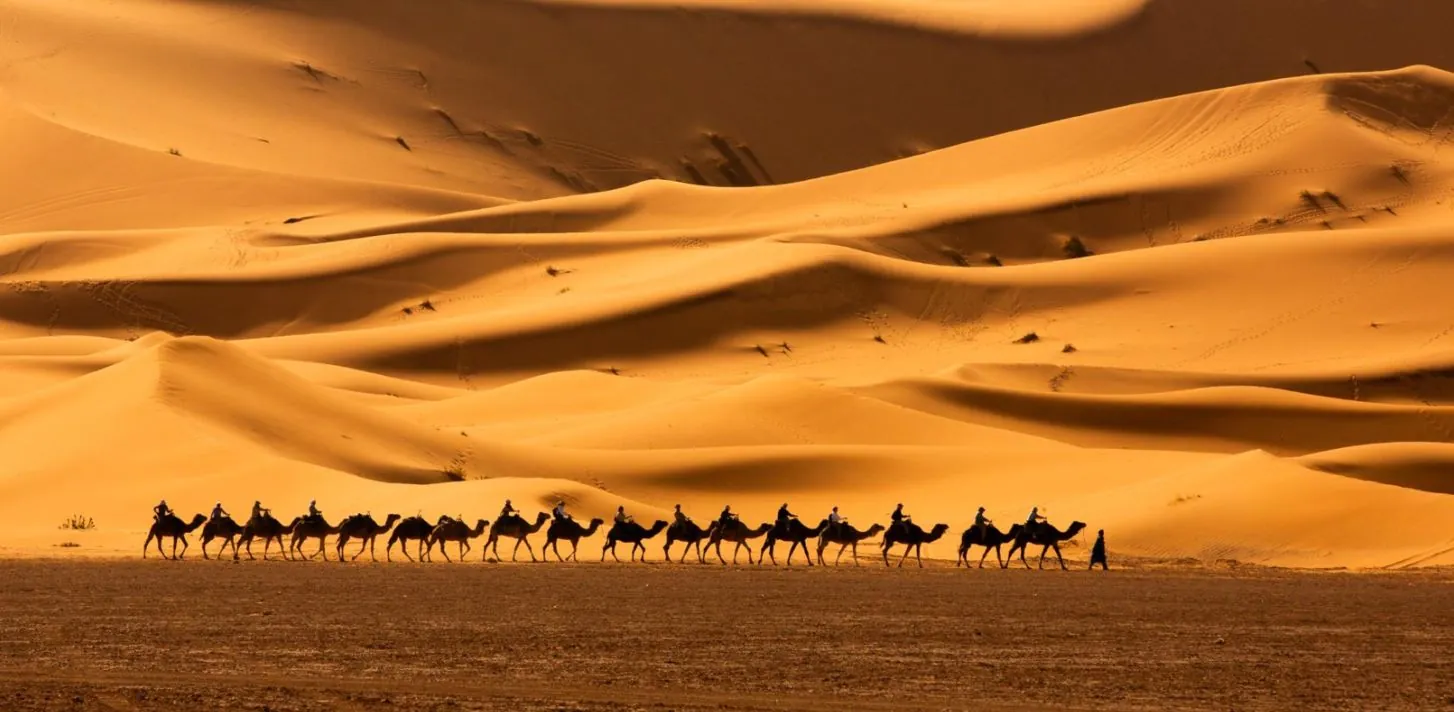
The best things to do in Morocco wake up all five senses: walk the spice souks and tanneries of Fes, drink mint tea wherever it’s offered, eat a slow-cooked tagine, get scrubbed in a hammam, listen to Gnawa music and the call to prayer, and spend at least two nights in the Sahara for sunrise on the dunes and total silence. Take your time: Morocco is felt more than seen.
Most lists of things to do in Morocco are really lists of places: Marrakech, Fes, Chefchaouen, the Sahara. All worth seeing. But the moments people remember years later are rarely “we saw the square”. They’re the smell of cumin in a dark souk, the first sip of mint tea, the cold sand at dawn, the call to prayer rolling over the rooftops at sunset. Morocco is a country you feel more than you see. So here are 15 things to do in Morocco, sorted by the sense they’ll wake up.
Smell
1. Get lost in the spice souks
Walk into the spice stalls of the Fes or Marrakech medina and your nose gets there before your eyes do. Cumin, paprika, cinnamon, dried rose petals, saffron and pyramids of ras el hanout, the house blend every spice seller swears is the best in town (it often contains twenty or more spices, and no two are the same). Stop, ask, smell. Most sellers are delighted to explain what goes in a tagine and what goes in a cup of tea.
Good to know: real saffron is never cheap. If a big bag costs less than lunch, it isn’t saffron.
2. Brave the tanneries of Fes
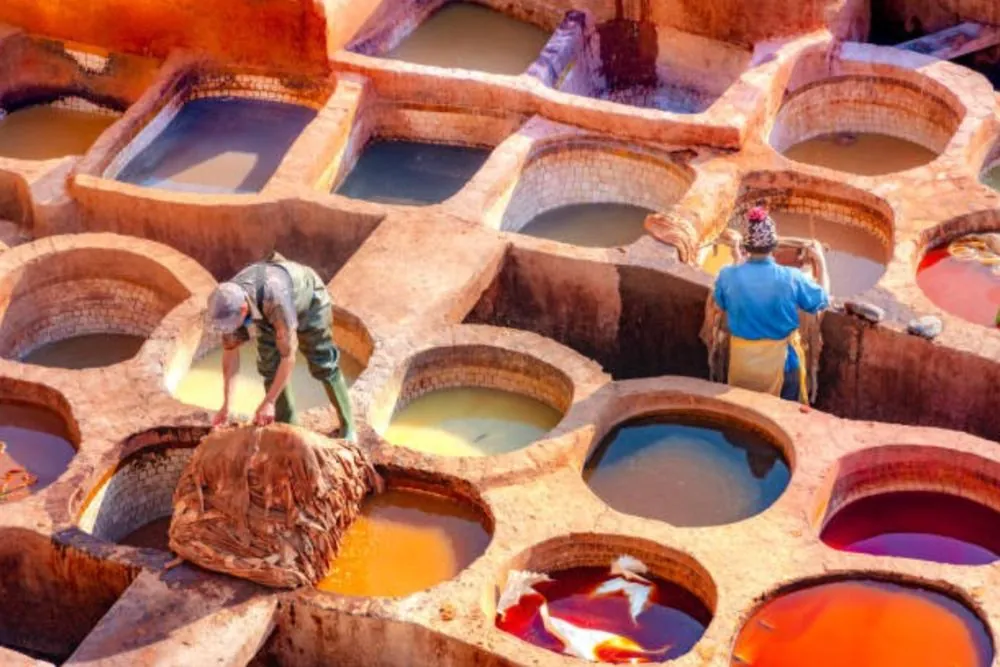
The Chouara tannery in Fes el-Bali has worked leather the same way for centuries: stone vats of dye, skins drying on rooftops and men waist-deep in colour. It is one of the most remarkable sights in Morocco, and one of the strongest smells. You’ll be handed a sprig of fresh mint at the entrance to hold under your nose. Use it. The best view is from the leather shops’ terraces above, and the morning light is the kindest.
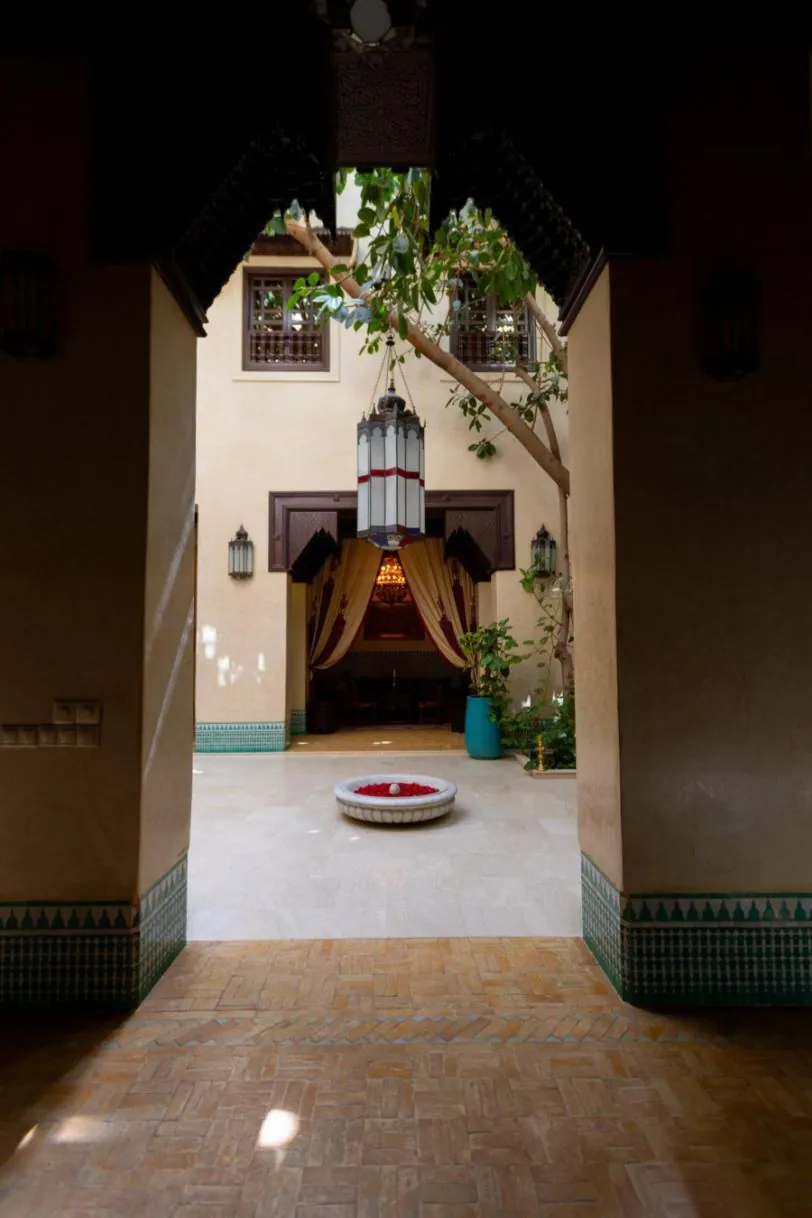
3. Breathe in a riad courtyard
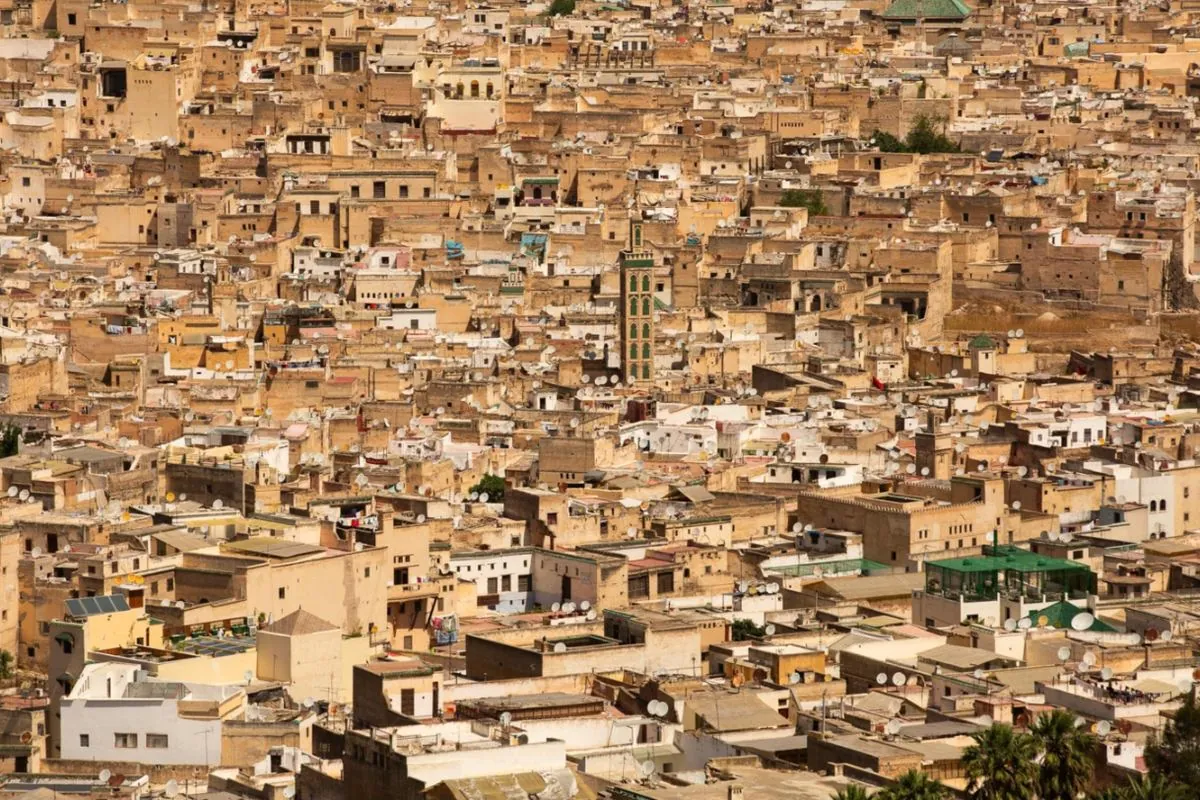
Step through a plain door off a noisy lane and the medina simply stops. Orange trees, jasmine, rose water, the faint smell of cedar from the carved ceilings and fresh mint waiting for the tea. Staying in a good courtyard house is one of the great pleasures of Morocco, and my guide to what a riad is and how to choose one explains why.
Taste
4. Accept the mint tea (every time)
Moroccan mint tea is green tea, a fistful of fresh mint and a generous amount of sugar, poured from a height so it froths in the glass. It isn’t really a drink, it’s a welcome. You’ll be offered it in riads, in shops, in mountain villages and in desert camps, and saying yes is how conversations start. If you prefer it less sweet, ask for “shwiya sukkar” (a little sugar). Nobody will mind.
5. Eat a tagine that’s taken all afternoon
A proper tagine is slow food: lamb with prunes and almonds, chicken with preserved lemon and olives, vegetables that have quietly given up in the best possible way. The best ones aren’t in restaurants with laminated menus. They’re cooked in riad kitchens and small family places, and they taste completely different. Add couscous on a Friday, pastilla in Fes (sweet and savoury in a way that shouldn’t work, but does) and harira soup, especially at sunset during Ramadan.
6. Follow the bread
In the old medinas, families still prepare dough at home and send it to the neighbourhood wood-fired oven, the farran, to be baked. Follow a tray of loaves down a lane in Fes and you’ll find one. Then try msemen (flaky square pancakes) with honey for breakfast, khobz with olive oil, and a glass of fresh orange juice from a cart for almost nothing.
7. Taste the dates of the Draa Valley
South of the High Atlas, the Draa Valley is a long ribbon of palm groves between the mountains and the Sahara, and it grows some of Morocco’s best dates. The harvest is in autumn. Eaten in an oasis, sitting under the palms they came from, they taste nothing like the ones in a supermarket box at home.
Touch
8. Get scrubbed in a hammam
A hammam is a traditional steam bath, and in Morocco it’s still part of everyday life. You sit in the heat, get covered in savon beldi (a soft black olive soap), then scrubbed with a rough kessa glove until you’re fairly sure you’ve lost a layer of skin. Then rinsed, wrapped in clay and left to melt. You can go to a local neighbourhood hammam or a more comfortable spa version in a riad. Either way, you’ll sleep beautifully.
9. Feel the craft in Fes
Morocco is a country made by hand. Run your fingers over zellige (hand-cut mosaic tiles), the cool polished plaster called tadelakt, a carved cedar door, a handwoven rug or a piece of soft leather. In the artisans’ quarters of Fes you can watch metalworkers, weavers and tile-cutters at work, often in workshops that have been in the same family for generations. Buying something from the person who made it is a very different feeling from buying it in a shop.
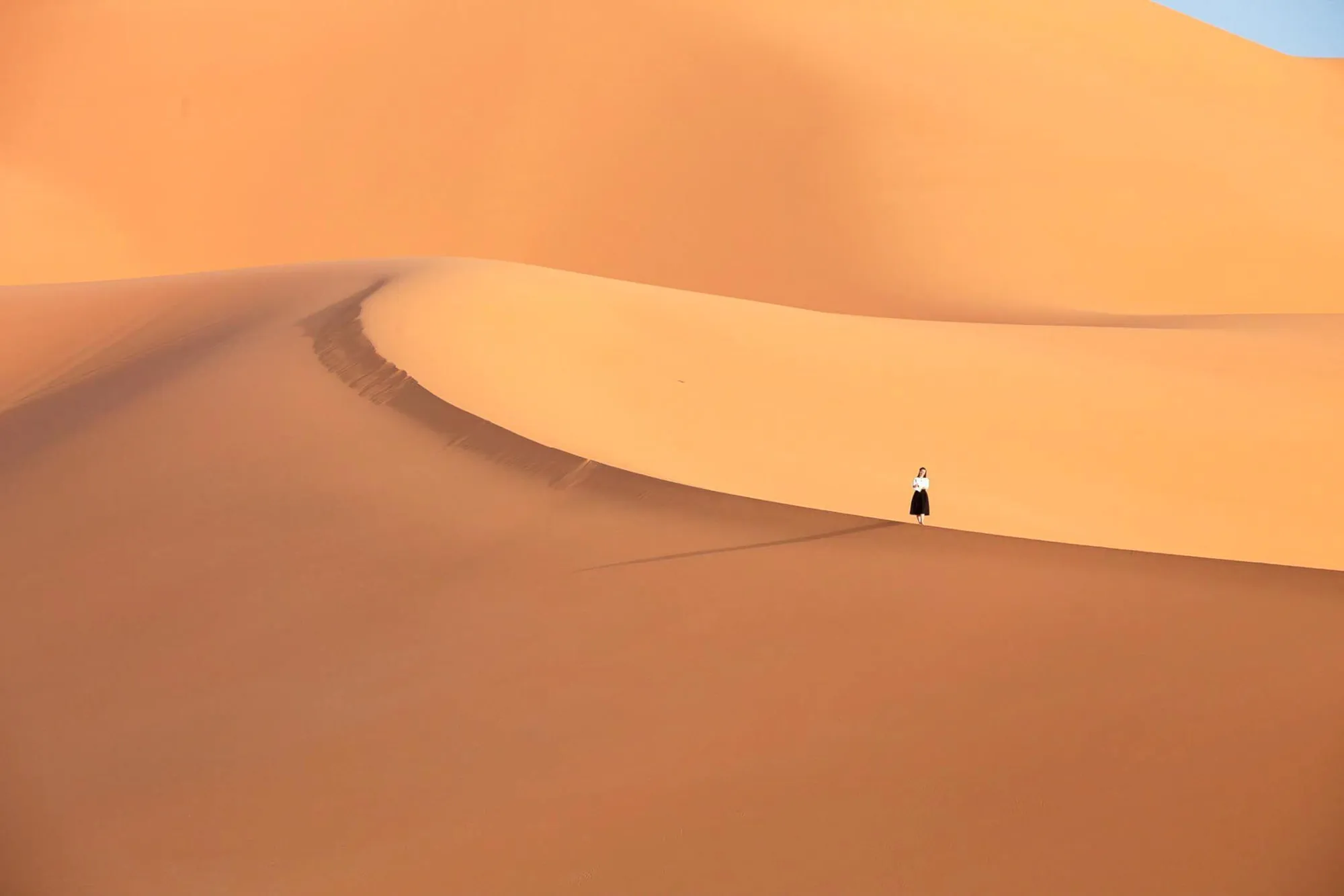
10. Walk barefoot on the dunes at dawn
Desert sand is surprisingly cold first thing in the morning, and impossibly fine. Climb a dune in the dark, sit down, and wait for the sun. In the wild dunes of Erg Chegaga there’s a good chance you’ll be the only people on that ridge. If you’re choosing between Morocco’s two big deserts, my Erg Chegaga vs Merzouga guide helps you decide.
Sound
11. Listen to the call to prayer at sunset
Five times a day the call to prayer rises from the minarets, one after another, until the whole city seems to be singing. Find a rooftop terrace in Fes or Marrakech just before sunset, order a tea and listen. It’s one of those moments that makes people go quiet, whatever they believe.
12. Hear Gnawa music by the fire
Gnawa is hypnotic, rhythmic music with deep roots in West Africa, played on a three-stringed bass called the guembri and heavy iron castanets called qraqeb. UNESCO added it to its list of the world’s intangible cultural heritage in 2019. You’ll hear it in the squares, at festivals and, best of all, around a campfire in the desert, where the rhythm seems to fit the dunes perfectly.
13. Hear nothing at all
The most surprising sound in Morocco is silence. Deep in the Sahara, with no roads, no phones and no other camps nearby, it’s so quiet you can hear the sand move. After the noise of the medinas, a night like that does something to people. Most say it’s the part of the trip they think about most.
Sight
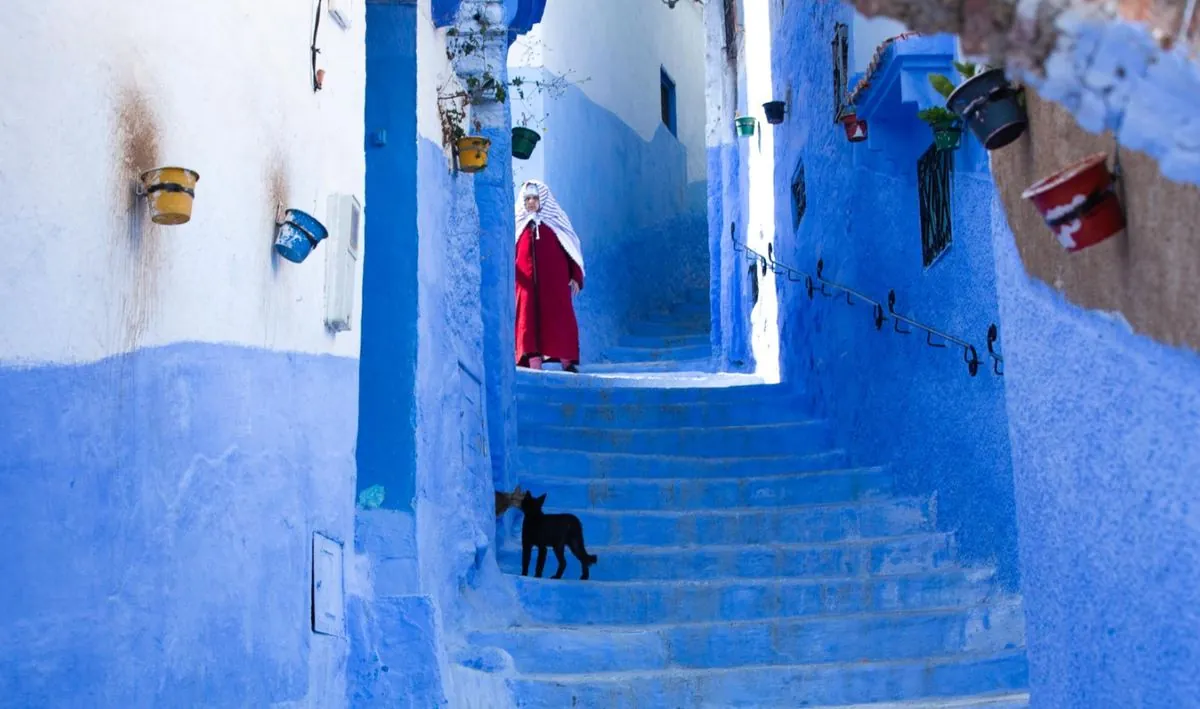
14. Lose yourself in the blue and the white
Chefchaouen’s blue lanes in the Rif Mountains are famous for a reason, and early morning before the day-trippers arrive is magical. Just down the road, Tetouan is the opposite: a white, Andalusian-style medina listed by UNESCO in 1997, one of the best preserved in Morocco and one of the least visited. Seeing the two back to back is a real treat. My Morocco photography guide has the best spots and times for both.
15. Watch the sun set over two seas
In Tangier, take a seat on the terraces of Café Hafa, open since 1921, with a glass of mint tea and the Strait of Gibraltar below you, Spain on the horizon. Further down the coast in Casablanca, the Hassan II Mosque stands right on the Atlantic, with waves breaking beneath it and one of the tallest minarets in the world above. Ocean light is completely different from desert light, and it’s a beautiful way to end a journey.
When Morocco smells, tastes and sounds its best
The senses change with the seasons, which is one more reason to think about the best time to visit Morocco before you book.
- Spring (March to May): orange blossom season. In March and April whole streets in Marrakech and Fes smell of it, and in May the Dades Valley around Kelaat M’Gouna celebrates the harvest of the pink Damask roses that end up in rose water across the country.
- Autumn (September to November): warm days, cool desert nights and the date harvest in the oases of the south. The light is softer and the dunes glow.
- Ramadan: the days are quieter, but the evenings are something else. When the sun sets, harira, dates and sweet chebakia pastries appear on every table and the streets fill up. In 2027 it falls roughly from early February to early March.
- Summer: very hot inland. The Atlantic and Mediterranean coasts are at their liveliest, with grilled sardines on the harbour in the evening.
How to feel Morocco, not just see it
You can tick off every famous sight in Morocco in a week and still miss most of this. The things on this list need time: a slow afternoon in a riad, a second glass of tea, a full day in the Fes medina instead of a rushed morning, two nights in the desert instead of one. I’ve always believed you feel a place much more when you stop rushing it, and when you share it with a small group of people who love it as much as you do.
It also helps to be with someone who knows the people behind the doors: the spice seller who’ll explain his ras el hanout, the family whose oven bakes the neighbourhood’s bread, the desert team who know exactly which dune to climb at dawn. That’s the Morocco that stays with you. If it’s your first trip, my Morocco travel tips cover the customs that make everything easier.
The senses on our Morocco journey
Our Morocco Signature Journey is built around exactly these moments, with a maximum of 8 travellers and plenty of time in each place:
- Smell and craft: two nights in Fes, with a morning in Fes el-Bali with a historian guide, the Chouara tannery and the artisans’ quarters.
- Taste: the palm groves and kasbahs of Agdz in the Draa Valley, and mint tea at Café Hafa as the sun goes down over the Strait of Gibraltar.
- Touch and silence: two nights in the wild dunes of Erg Chegaga, with sunrise from the high dunes and music around the fire, then a night at Merzouga.
- Sight: sunset over Chefchaouen from the Spanish Mosque, the white medina of Tetouan, the quiet beaches of Dalia and Playa Belyounech and the Hassan II Mosque on the Atlantic.
Food is deliberately not included, so you can eat wherever your nose leads you, and we’ll always point you to the best places nearby. If you’d like to experience Morocco with all five senses, slowly and with good company, I’d love to show you. Ask me anything about the journey.
Frequently asked questions
What is Morocco most famous for?
Its old walled medinas (Fes, Marrakech, Tetouan), the Sahara dunes, the blue town of Chefchaouen, the High Atlas mountains, its food (tagine, couscous, mint tea) and its crafts: zellige tiles, leather, rugs and carved cedar. Above all, Moroccans are famous for their hospitality.
What should you not miss in Morocco?
A night or two in the Sahara, a full day in the Fes medina, sunset from a rooftop with the call to prayer, a proper hammam, and mint tea in someone’s home. Leave space for slow afternoons; they’re often the best part.
What does a Moroccan hammam involve?
You relax in a hot steam room, are covered in black olive soap (savon beldi), then scrubbed with a rough kessa glove, rinsed and often wrapped in rhassoul clay. Public hammams are separated by gender. Riad and spa hammams are more private and comfortable.
Is it worth visiting the tanneries in Fes?
Yes. The Chouara tannery is one of the most extraordinary sights in Morocco. The smell is strong, so take the sprig of mint you’re offered at the door. The best views are from the terraces of the leather shops around it, ideally in the morning.
Is Moroccan mint tea always sweet?
Traditionally, very. It’s made with green tea, fresh mint and plenty of sugar. You can always ask for it with less sugar (“shwiya sukkar”) or none, and nobody will be offended.
What food should I try in Morocco?
Tagine, couscous (traditionally on Fridays), pastilla, harira soup, msemen pancakes, fresh bread from a communal oven, local dates, fresh orange juice and, of course, mint tea. The best food is usually cooked in riad kitchens and small family places.