The Sahara in Morocco: Erg Chegaga vs Erg Chebbi (Merzouga), and How to Choose a Camp
Two seas of sand, two completely different experiences. Which one to choose, how long to stay and how to avoid a terrible camp.
 By Bijan Paul, founder & tour leader
Updated · 6 min read
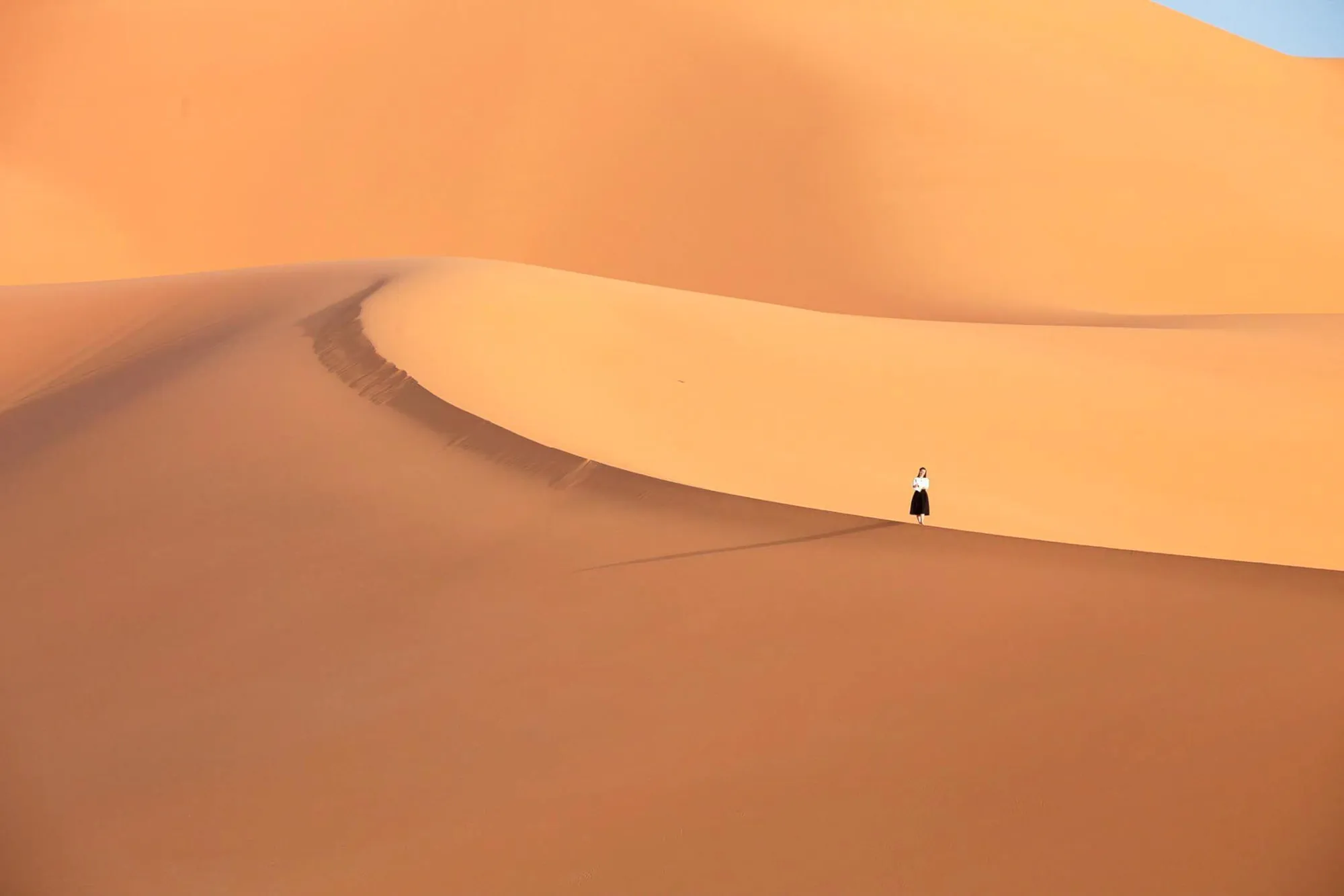
Choose Erg Chebbi at Merzouga if you want the highest dunes (up to around 150 metres), paved roads all the way and lots of camp options. Choose Erg Chegaga, near M’Hamid, if you want wilder, quieter desert reached by around 60 km of off-road 4x4 driving, with far fewer people. If you have 10 days or more, the best answer is both.
Most people go quiet the first time they stand on top of a Sahara dune. Even the talkers. Especially the talkers. If you’re planning a trip to Morocco, the desert is probably the bit you’re most excited about. It should be. But there’s a decision to make first, and most people don’t even know it exists: which desert?
Morocco’s two big dune seas
When people talk about “the Sahara in Morocco”, they usually mean one of two ergs (seas of dunes):
- Erg Chebbi, next to the village of Merzouga in the east, near the Algerian border.
- Erg Chegaga (also spelled Chigaga), beyond the village of M’Hamid at the end of the Draa Valley in the south.
There are smaller dune areas too, such as Tinfou near Zagora, and the stony Agafay plain near Marrakech that gets sold as a “desert experience”. Agafay is nice for dinner and a sunset. It is not the Sahara.
Erg Chegaga vs Erg Chebbi at a glance
| Erg Chebbi (Merzouga) | Erg Chegaga (M’Hamid) | |
|---|---|---|
| Dunes | Taller, up to around 150 m, compact | Lower but far larger, around 40 km of dunes |
| Getting there | Paved road to the edge of the dunes | Around 60 km off-road by 4x4 from M’Hamid |
| From Marrakech | 9 to 10 hours | Around 9 hours including off-road |
| Crowds | Busy, lots of camps, quad bikes | Quiet, few camps, real wilderness |
| Camps | Huge choice, from basic to very comfortable | Fewer, smaller, more remote |
| Best for | Shorter trips, iconic photos, first-timers | Silence, stars, feeling far from everything |
Erg Chebbi and Merzouga: the famous one
This is the Sahara most people picture. Tall, sharp, orange dunes rising straight out of a flat stony plain, the highest in Morocco. You can drive right to the edge of them on tarmac, and there are dozens of camps, from very simple to very comfortable, plus hotels in the village.
The good: easy to reach, spectacular dunes, lots of choice, and you can combine it with Fes or the Todra Gorge.
The not so good: it’s busy. In peak season you’ll share sunset with a lot of people, a few quad bikes, and the occasional drone someone smuggled in. Some camps are very close together.
My advice: pick a camp well away from the main cluster, and walk further than everyone else at sunrise. It makes a huge difference.
Erg Chegaga: the wild one
From M’Hamid, the last village at the end of the road, there’s no tarmac. You cross the desert by 4x4 for a couple of hours, over stony plains, dry riverbeds and small dunes, until Erg Chegaga rises in front of you. It’s the largest erg in Morocco and it feels like it. Far fewer camps, far fewer people, and a silence that makes your ears ring.
The good: real wilderness, extraordinary night skies, no queues of camels, and a proper sense of adventure getting there.
The not so good: it takes longer to reach, you need a good 4x4 and an experienced desert driver, and the camps are more remote (which, to be honest, is the point).
My advice: stay two nights. You don’t drive all that way for one sunset.
So which should you choose?
- Short trip, under a week? Erg Chebbi. It’s easier to fit in.
- Want the iconic, tall orange dunes? Erg Chebbi.
- Want silence, stars and to feel properly far away? Erg Chegaga.
- Hate crowds? Erg Chegaga, without question.
- Ten days or more? Do both. Seriously.
That last one is what we do on our Morocco group tour: two nights in a premium camp deep in Erg Chegaga, then across to Merzouga for a night at Erg Chebbi before heading north to Fes. You see the wild desert and the famous one, and it makes geographic sense on the way north. The full route is in my 12-day Morocco itinerary.
How to choose a good desert camp
This matters more than which dune you choose. A great camp makes the desert. A bad one is a sad tent next to a generator. Here’s what to check:
- Location. How far is it from the road and from other camps? Ask for a map pin. Far is good.
- Size. Ten to fifteen tents is lovely. Sixty is a festival.
- Bathrooms. Private bathrooms with hot water and a proper toilet are a big upgrade. Look at actual photos.
- Beds and bedding. Real beds and thick blankets, especially from November to March when nights get cold.
- Food. Good camps cook properly: soup, tagine, fresh bread, fruit. Read reviews.
- Light and noise. The best camps keep lighting low so you can see the stars, and switch the generator off at night.
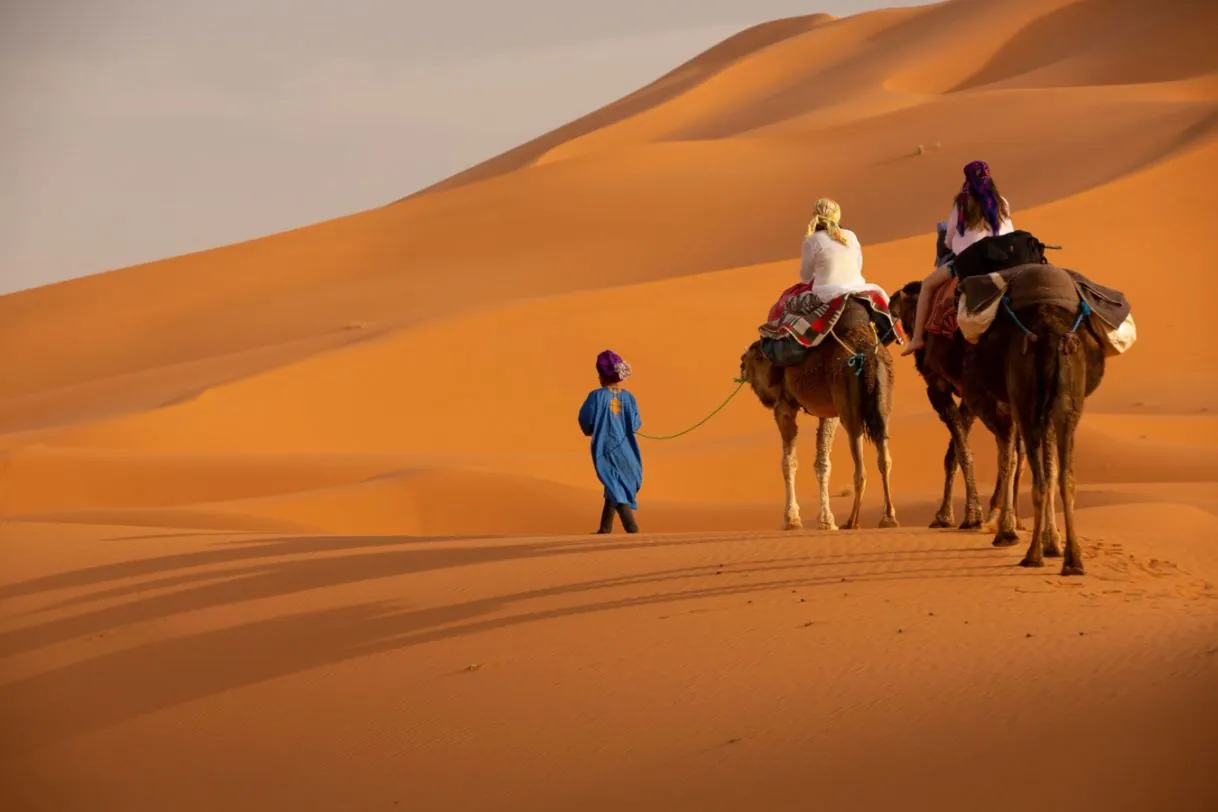
- How you arrive. Camel at sunset, 4x4, or walking. All fine, just know which.
What to pack for the Sahara
- Warm layers for the night, even in September and October.
- A scarf or cheche (desert turban) for sun and wind. Your guide will happily show you how to tie it. Expect to look ridiculous in photos.
- Sunglasses, sun cream, lip balm.
- A small overnight bag. Leave your big suitcase in the vehicle.
- A head torch.
- Zip bags to protect cameras and phones from sand. I cover more in my Morocco photography guide.
Camels: a quick word
A camel ride at sunset is a classic, and with a good camp the animals are well looked after. If the camels look thin, injured or overworked, say no and walk. You can always walk into the dunes, and honestly, after twenty minutes on a camel, many people wish they had.
When to go
March to May and mid-September to November are ideal: warm days and comfortable nights. Summer is brutally hot. Winter is beautiful but nights drop close to freezing. More in my guide to the best time to visit Morocco.
The bottom line
Don’t rush the desert. Take your time with it. Some of the best moments I’ve had here were simply sitting on a dune with good company, watching the light change, with nowhere else to be. You feel the place so much more that way. Whichever erg you choose, give it two nights and pick your camp carefully. And if you can find a way to do Erg Chegaga, do. It’s the closest thing to the Sahara of your imagination that I’ve found in Morocco. It’s one of the places I fell in love with Morocco, and I’d love to show it to you.
Frequently asked questions
Which is better, Erg Chegaga or Erg Chebbi?
Neither is better, they’re different. Erg Chebbi at Merzouga has taller dunes, easier access and more camps, but it’s much busier. Erg Chegaga is larger, wilder and quieter, but takes longer to reach and needs a 4x4. For a short trip, Merzouga is easier. For a real sense of wilderness, Chegaga wins.
How many nights should I spend in the Sahara?
Two if you can. On a one-night trip you arrive for sunset, sleep and leave after sunrise. With two nights you get a full day in the dunes to walk, rest and really take it in. Most people who do one night wish they’d done two.
Can you do the Sahara as a day trip from Marrakech?
Not the real Sahara. Merzouga is around 9 to 10 hours’ drive from Marrakech and Erg Chegaga roughly the same, including the off-road section. The Agafay ‘desert’ near Marrakech is a stony plain, not dunes. Lovely for dinner, but not the Sahara.
Are the desert camps comfortable?
They range from very basic to very comfortable. The better camps have proper beds, private bathrooms with hot water, good food and warm bedding. Check photos of the actual tents and bathrooms, and how far the camp is from the road, before you book.
When is the best time to visit the Sahara in Morocco?
March to May and mid-September to November. Summer is extremely hot, often over 45°C. Winter days are pleasant but nights can drop to around freezing, so you’ll need warm layers.
Is the Sahara safe for solo travellers?
Yes, especially with a reputable camp and driver. The main risks are sun, heat and dehydration, not people. Drink lots of water, cover up in the middle of the day, and go with an organised trip rather than someone who approached you in the street.