Morocco Photography Guide: The Best Places, the Best Light and How to Ask
Where to stand, when to be there and how to photograph people without being that tourist. From someone who’s been shooting Morocco for years.
 By Bijan Paul, founder & tour leader
Updated · 7 min read
The best places to photograph in Morocco are the Sahara dunes at Erg Chegaga and Erg Chebbi, the blue streets of Chefchaouen, the Fes medina and tanneries, Aït Ben Haddou, Marrakech’s Jardin Majorelle and the Draa Valley palm groves. Shoot in the first and last hour of light, always ask before photographing people, and leave the drone at home, as they’re confiscated at customs without a permit.
I’ve been photographing Morocco for years and I still get it wrong. I still miss the odd sunrise because of one more coffee, and I could fill a memory card with a single tannery. Morocco is one of the most photogenic countries I’ve been to, out of 115, and that’s saying something. Here’s where to go, when to be there and how to do it without upsetting anyone.
The golden rule: chase the light, not the list
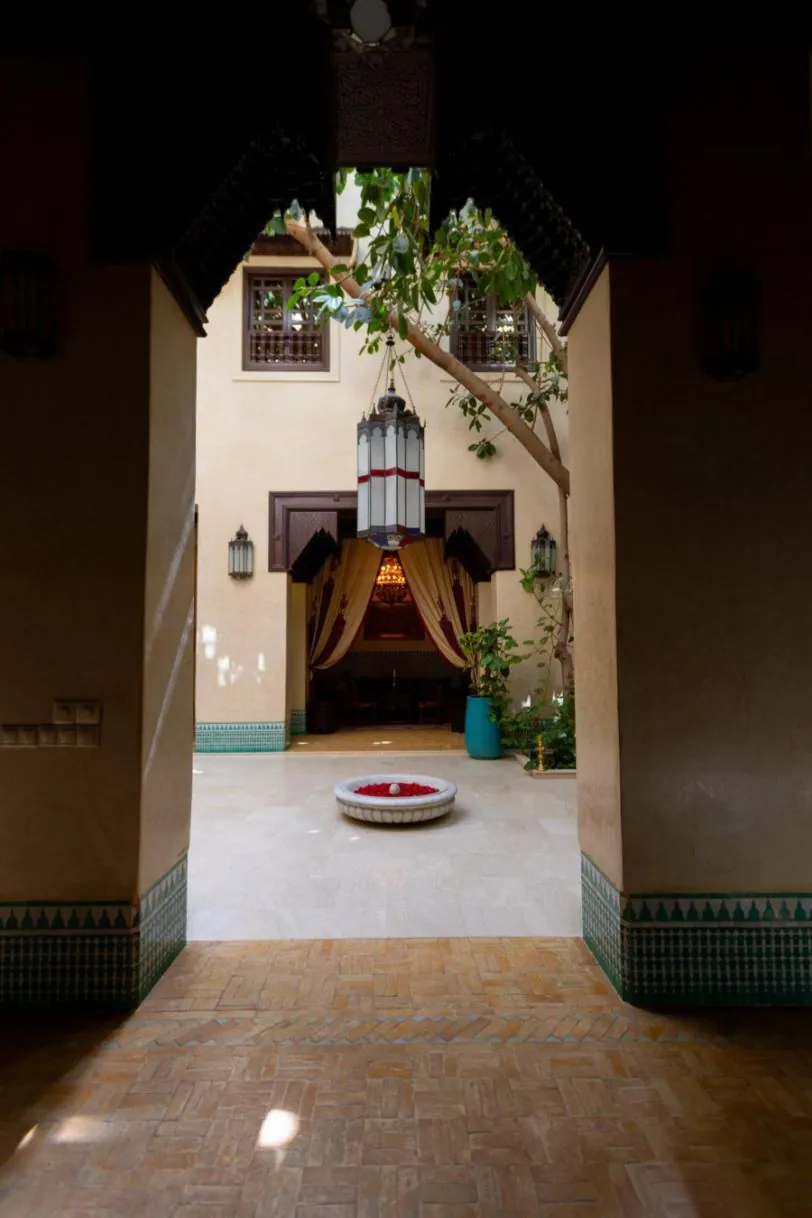
Morocco’s midday light is harsh. Flat, white and full of deep shadows. The same street that looks like a postcard at 7am looks like a car park at noon. Plan your days around the first and last hour of light, and use the middle of the day for lunch, a riad courtyard, or the inside of a medina where the light filters down softly between the walls.
This is exactly why we built our own Morocco group tour around sunrise and sunset rather than a coach timetable. You can’t photograph a dune at sunset if you arrive after dark.
The best photography spots in Morocco
1. Erg Chegaga, the Sahara
Why: Morocco’s wildest dunes, reached only by 4x4 across the desert. No roads, no crowds, no quad bikes in the frame.
When: Sunrise and sunset, and at night for the stars. There’s virtually no light pollution.
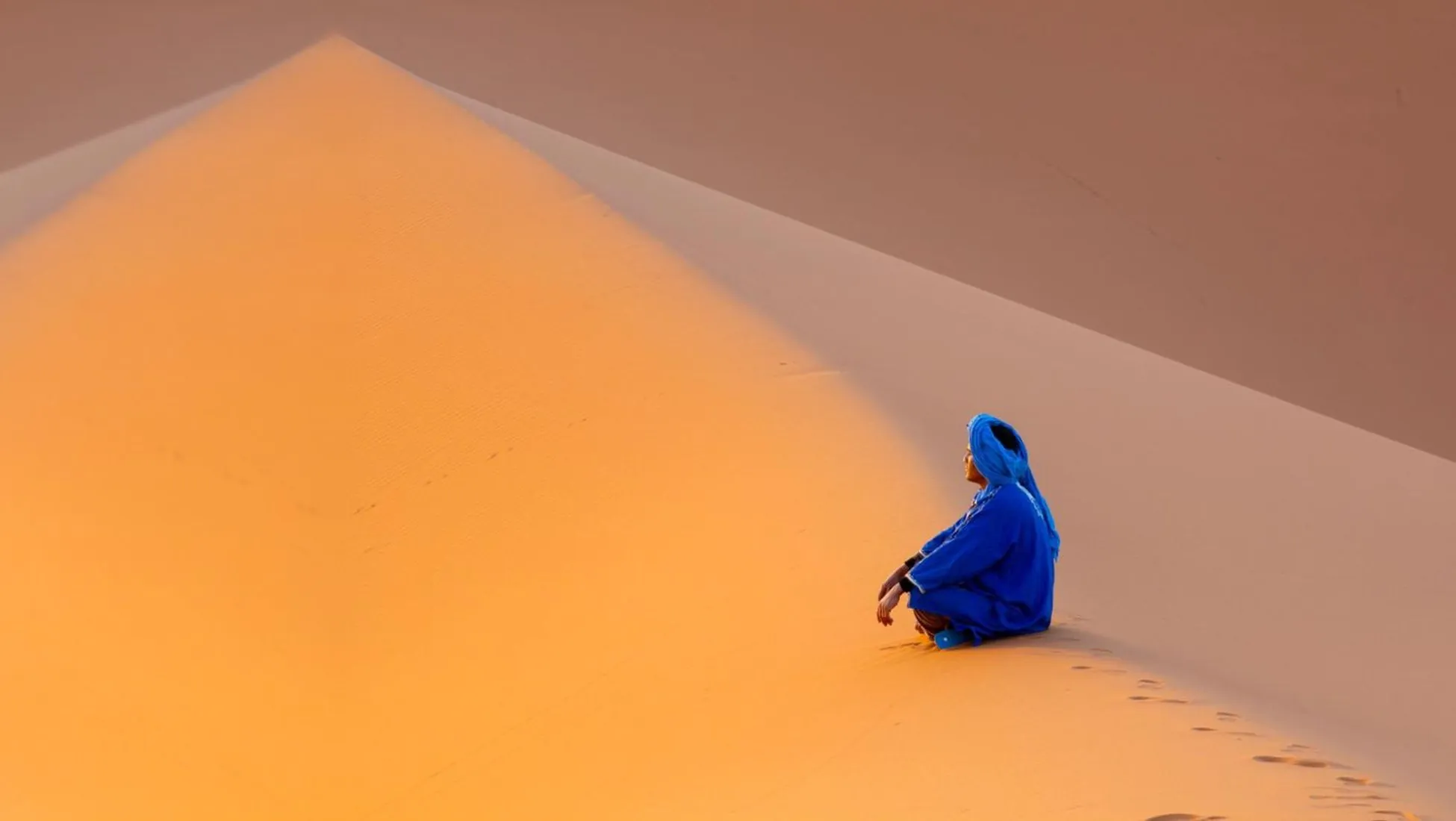
Tip: Walk away from camp at sunset and shoot back towards it as the lights come on. Low angles make ripples look like mountain ranges. A longer lens compresses the dune lines beautifully.
Watch out for: Sand. It gets everywhere. Change lenses inside a tent or not at all.
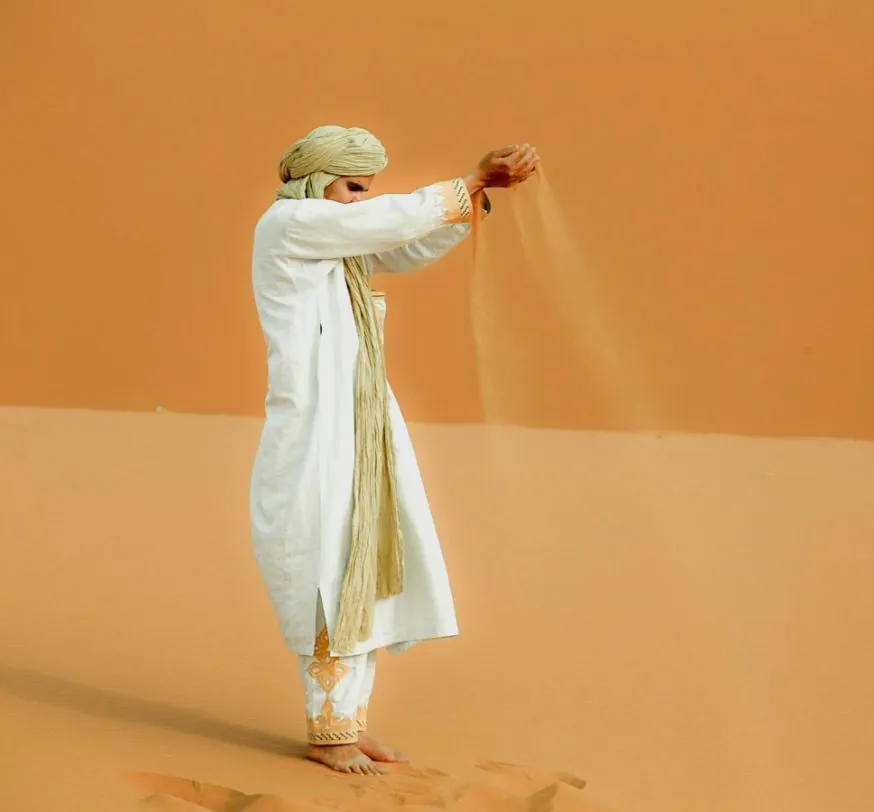
2. Erg Chebbi, Merzouga
Why: The highest dunes in Morocco, around 150 metres in places, with that rich orange colour you’ve seen in every Sahara photo.
When: Sunrise from the top of a big dune, when the shadows are long and deep.
Tip: It’s much busier than Chegaga. Walk further than everyone else and you’ll lose the footprints. I compare the two in my Sahara desert guide.
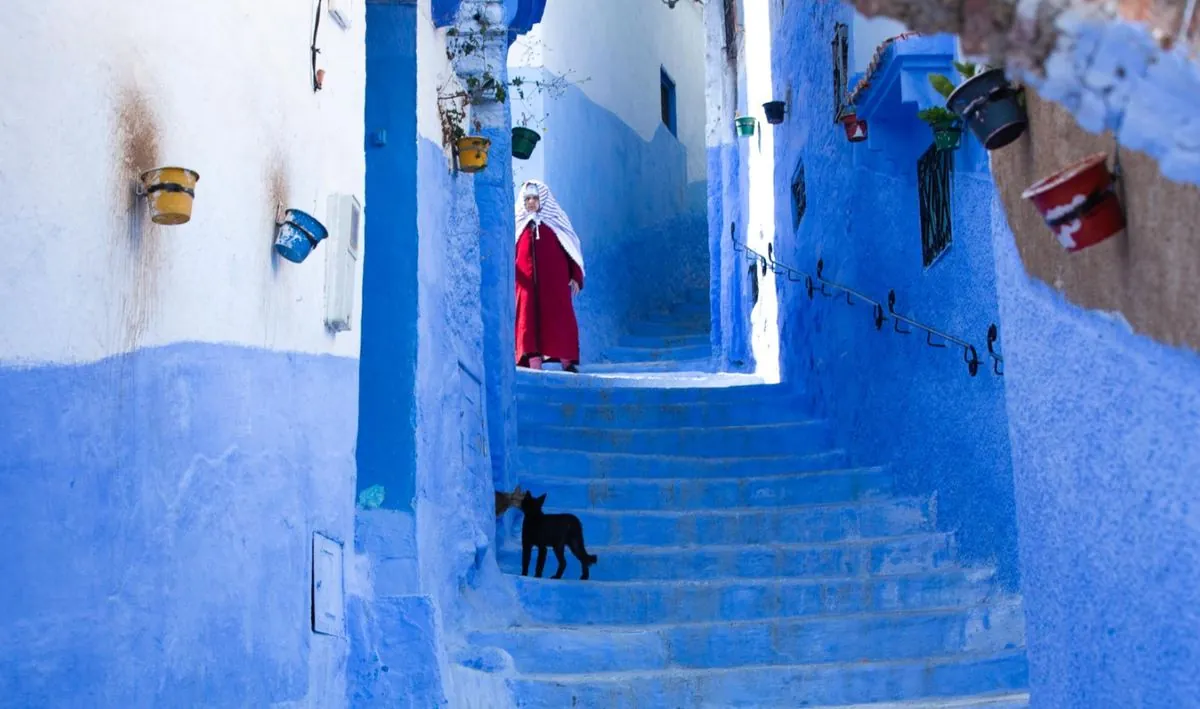
3. Chefchaouen, the blue city
Why: Every wall, door and staircase painted in shades of blue. It’s as good as the photos, honestly.
When: Early morning, before the crowds and before the light gets hard. Blue looks best in soft or open shade.
Tip: Walk up to the Spanish Mosque for sunset over the whole town. In the lanes, look for doors, cats and pots rather than wide shots full of other photographers.
Etiquette: People live in these houses. Don’t sit on their steps for a photoshoot, and don’t move their plants.
4. The Fes medina and the Chouara tannery
Why: The largest car-free urban area in the world, a thousand years of craft, and the famous honeycomb of dye pits.
When: The tannery is best in the morning, when the pits are full and work is under way. For the whole city, go up to the hills or the Merenid tombs at sunset.
Tip: You photograph the tannery from the terraces of the leather shops around it. They’ll offer you a sprig of mint for the smell. Take it. Trust me.
5. Aït Ben Haddou
Why: A UNESCO-listed earthen ksar on the old caravan route, and the backdrop for more films than I can count.
When: Late afternoon and sunset, from across the river, when the whole village glows red.
Tip: Climb to the granary at the top for a view back over the valley.
6. The Draa Valley and Agdz
Why: Miles of palm groves, crumbling kasbahs and the Kissane mountain behind. One of the most underrated landscapes in Morocco.
When: Early morning, with mist in the palms if you’re lucky.
Tip: Stop on the road above the valley for the classic view down over the palmeraie. Ask your driver, they always know the spot.
7. Marrakech
Why: Colour, chaos and a lot of rooftops.
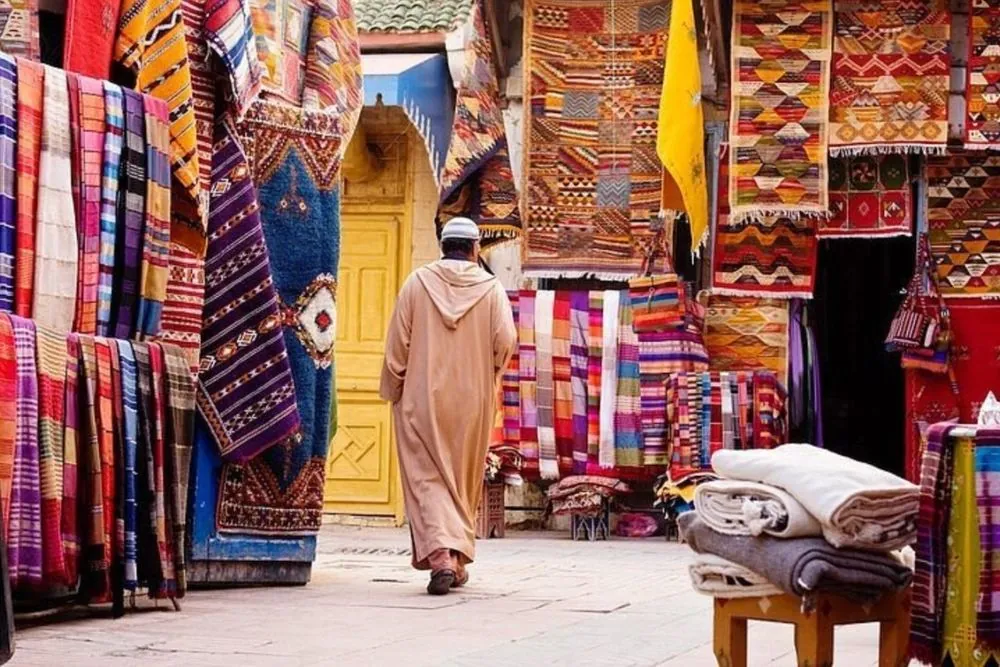
Where: Jardin Majorelle for its electric blue and cactus shapes (go at opening time), the souks for light and texture, and any rooftop café for the Koutoubia at sunset.
Etiquette: Performers and water sellers in Jemaa el-Fnaa will expect payment for photos. Agree first, pay fairly, and don’t sneak shots. Majorelle doesn’t allow tripods.
8. Tetouan
Why: A UNESCO-listed medina with white walls, green doors and Andalusian style, and hardly any tourists.
Tip: Great for quiet street photography. Locals are less used to cameras than in Marrakech, so be extra considerate.
9. Tangier and Cap Spartel
Why: Where the Atlantic meets the Mediterranean, with Spain on the horizon.
When: Sunset at Café Hafa, terraced over the Strait of Gibraltar since 1921. Then the kasbah at blue hour.
10. Hassan II Mosque, Casablanca
Why: One of the largest mosques in the world, built right over the Atlantic, and one of the few in Morocco open to non-Muslim visitors on guided tours.
When: Blue hour from the promenade, when the minaret lights come on.
Slow down and the photos come
The best images I’ve taken in Morocco didn’t come from rushing between viewpoints. They came from staying put: waiting for the light to change, sitting with people long enough that the camera stopped being a big deal, coming back to the same spot a second time. When you take your time and travel with a good group, you feel the beauty of a place more, and honestly, it shows in the photos.
How to photograph people in Morocco (without being that tourist)
This is the bit that matters most. Many Moroccans don’t like being photographed. For some it’s religious, for some it’s privacy, and some are simply fed up with being a background for someone’s holiday photos. Fair enough.
- Always ask. A smile, a gesture to the camera and “mumkin?” (may I?) usually does it.
- Take no for an answer. Immediately, and with a smile.
- Talk first, shoot later. Buy something, chat, admire their work. The best portraits come after a conversation, not before.
- Show them the photo. People love it, and it turns a transaction into a moment.
- Be extra careful with women and children. Ask, and expect a no more often than a yes.
- Never photograph police, military or royal palace guards. Just don’t.
Drones: leave it at home
Bringing a drone into Morocco without authorisation is prohibited, and customs regularly confiscate them at the airport. Getting a permit is slow and complicated. Losing an expensive drone on your first hour in the country is not a great start. It’s not worth it.
What gear to bring
- A wide-angle lens (16–35mm or similar) for medinas, riads and architecture.
- A short telephoto (70–200mm) for dune shapes, compressed landscapes and details.
- A light travel tripod for stars in the desert. Check the rules before using it at sites.
- Spare batteries. Desert camps often have limited charging, and cold nights drain batteries fast.
- A blower, cloths and zip bags for sand and dust.
- A small, low-key bag. A huge camera bag draws attention in the souks. Smaller is friendlier.
- Phone photographers: honestly, a modern phone does brilliantly here. Use night mode in the desert and clean your lens every five minutes.
Should you join a photography group tour?
If photography is a big part of why you travel, a well-planned small group tour makes a huge difference. Not because you need someone to tell you about aperture, but because being in the right place at the right time is 90% of travel photography, and that’s all logistics.
Look for: a small group (eight or fewer is ideal, nobody wants nine tripods on one dune), two nights in the desert, time at key places at sunrise and sunset, quieter places as well as famous ones, and a leader who actually takes photos. I’ve written more about what makes a good one in my guide to small group tours of Morocco.
Our Morocco Signature Journey isn’t a technical photography workshop, but it is planned by a photographer and filmmaker, with sunrise in the dunes, sunset over Chefchaouen and Café Hafa, and plenty of time to wander with a camera. If that sounds like your kind of trip, get in touch.
Best season for photography in Morocco
Autumn and winter give the best light: low sun, long shadows and clear air. Spring brings green valleys and flowers. Summer light is harsh from mid-morning and the heat makes desert shoots hard work. There’s more detail in my guide to the best time to visit Morocco.
Frequently asked questions
Can you take photos of people in Morocco?
Yes, but always ask first. Many Moroccans, especially older people and women, don’t want to be photographed, and that has to be respected. A smile, a gesture to the camera and “mumkin?” (may I?) works well. Some people in tourist spots, like water sellers and snake charmers in Marrakech, will expect a few dirhams.
Are drones allowed in Morocco?
Not without permission. Bringing a drone into Morocco without authorisation is prohibited, and drones are regularly confiscated at the airport. Getting a permit is slow and complicated, so for most travellers the honest answer is: leave it at home.
What is the best time of year for photography in Morocco?
Autumn and winter give the best light: lower sun, softer shadows and clearer air. Spring is great for green valleys and flowers. Summer light is harsh from mid-morning, and the heat makes long shoots in the desert hard work.
What camera gear should I bring to Morocco?
A wide-angle lens for medinas and architecture, a short telephoto (70–200mm) for dune shapes and compressed landscapes, spare batteries, a dust blower and plenty of storage. A light travel tripod is useful for night skies in the desert. Keep your setup small: big kit attracts attention in the souks.
Is Morocco good for street photography?
Very, as long as you’re respectful. The medinas of Fes, Marrakech and Tetouan are full of colour, texture and life. Focus on scenes, light and details rather than close-up portraits of strangers who haven’t agreed, and you’ll come home with great images and no awkward moments.
What should I look for in a photography group tour of Morocco?
Small group size, time at the right place at sunrise and sunset, at least two nights in the desert, and a leader who actually photographs. Check whether the itinerary is planned around light or around a coach timetable, and whether it includes quieter places as well as the famous ones.