What Is a Riad? How to Choose a Boutique Riad in Morocco
Courtyards, rooftops, steep stairs and no room keys. What a riad actually is, and how to pick one you’ll love.
 By Bijan Paul, founder & tour leader
Updated · 5 min read
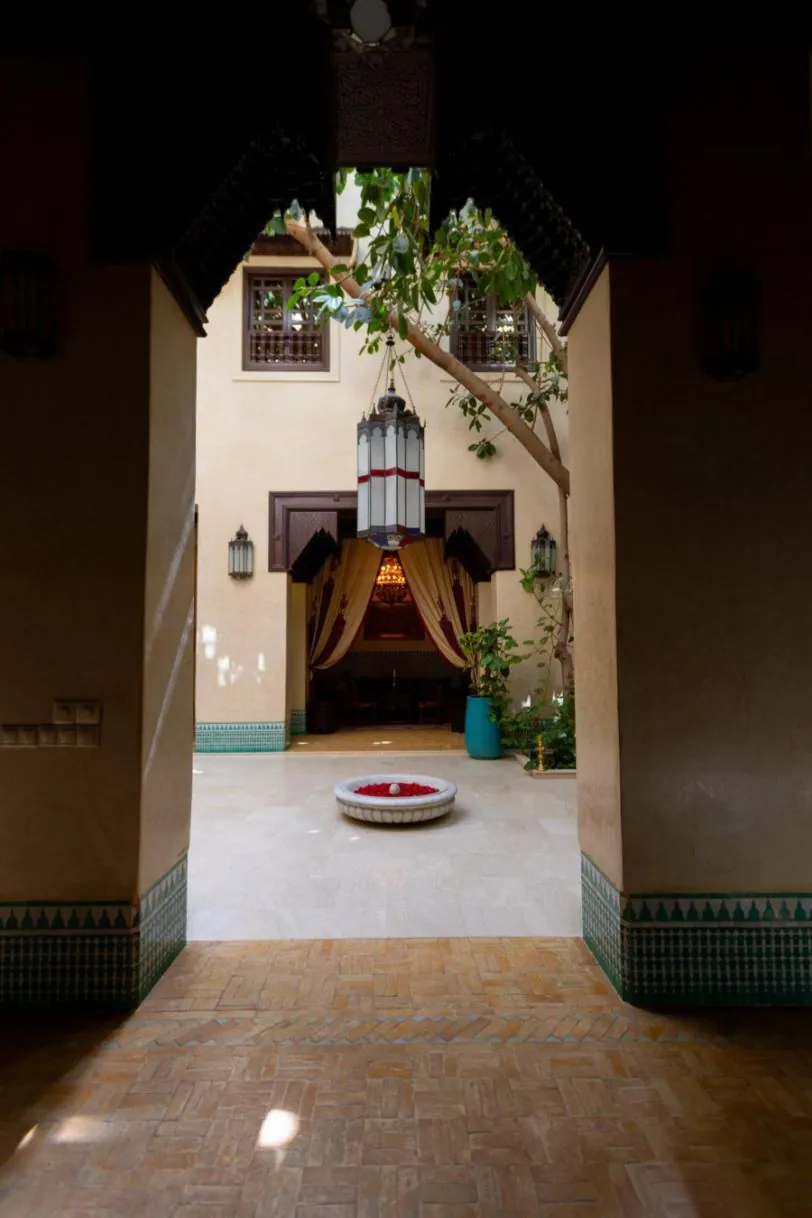
A riad is a traditional Moroccan house built around an open-air central courtyard or garden, usually inside an old medina. From the street you see only a plain wall and a door; inside are rooms on two or three floors facing the courtyard, and a rooftop terrace. Today most riads are small boutique guesthouses with between three and fifteen rooms.
The first time most people step into a riad, they say the same thing. Usually “wow”, sometimes something less printable. You walk down a dusty lane, through a plain wooden door in a plain wall, and suddenly you’re in a courtyard full of tiles, orange trees and silence, with the noise of the medina gone. Staying in good riads is one of the best things about travelling in Morocco. Here’s what they are, and how to pick a good one.
What is a riad?
A riad is a traditional Moroccan house built around a central courtyard or garden. The word comes from the Arabic for garden. Originally they were the homes of wealthy merchants and families, built inward-facing for privacy and to stay cool: thick walls, almost no windows onto the street, and everything opening onto the courtyard in the middle.
Today most riads in the medinas of Marrakech and Fes have been restored as small guesthouses and boutique hotels, usually with somewhere between three and fifteen rooms.
Inside a riad
The courtyard
The heart of the house. Open to the sky, often with a fountain or a small plunge pool, citrus trees, plants and comfy corners for mint tea. It works like natural air conditioning: cool air sinks into it, and the shade from the walls keeps it pleasant even in summer.
The decoration
Zellige (hand-cut mosaic tiles), carved plaster, painted cedar wood ceilings and tadelakt, a polished lime plaster that’s waterproof and lovely to touch. In good riads, all of it is handmade by local craftsmen.
The rooms
Arranged around the courtyard on two or three floors, usually facing inward. That means beautiful views of the courtyard but sometimes not much outside light, and you can hear the courtyard from your room.
The rooftop
Every riad worth its salt has a roof terrace: breakfast in the sun, sunset with the call to prayer echoing across the city, and in Marrakech views to the Atlas on a clear day. Possibly my favourite place to be in any Moroccan city.
Riad vs dar vs hotel
| Riad | Dar | Hotel | |
|---|---|---|---|
| What it is | Courtyard house with a garden | Courtyard house, no garden | Purpose-built |
| Size | 3 to 15 rooms | Usually smaller | Dozens to hundreds |
| Location | Inside the medina | Inside the medina | Usually outside it |
| Feel | Like staying in a beautiful home | Same, often more intimate | Could be anywhere |
| Facilities | Varies: some have pools, spas, restaurants | Usually simpler | Pools, gyms, lifts, parking |
In practice, lots of places called “riad” are technically dars. Nobody minds. What matters is the house itself and the people who run it.
How to choose a good riad: what I look for
- Location within the medina. Close to a gate or a car drop-off point is much easier. Deep in the medina is more atmospheric but harder to find (and at night, you will get lost). Most riads will send someone to meet you, and you should let them.
- The staff. In a riad, the people make the place. Read reviews for names. If guests mention staff by name, it’s a good sign.
- Number of rooms. Fewer rooms means quieter and more personal. More rooms often means a pool and a restaurant.
- Heating and cooling. Ask about both. Riads stay cool in summer, but winter nights can be cold, especially in Fes and Chefchaouen.
- Noise. Sound carries around a courtyard. If you’re a light sleeper, ask for a room on the top floor.
- Stairs. There are always stairs. Steep ones. Rarely a lift.
- A rooftop worth sitting on. Look at the photos. Sun loungers and shade make a big difference.
- Food. A great breakfast is standard. If they cook dinner, book it at least once.
Things nobody tells you
- Some rooms don’t have keys. Many smaller riads are run like a house. Ask if you want a lockable room, and use the safe.
- Alcohol varies. Some riads serve it, some don’t, some let you bring your own. Ask first.
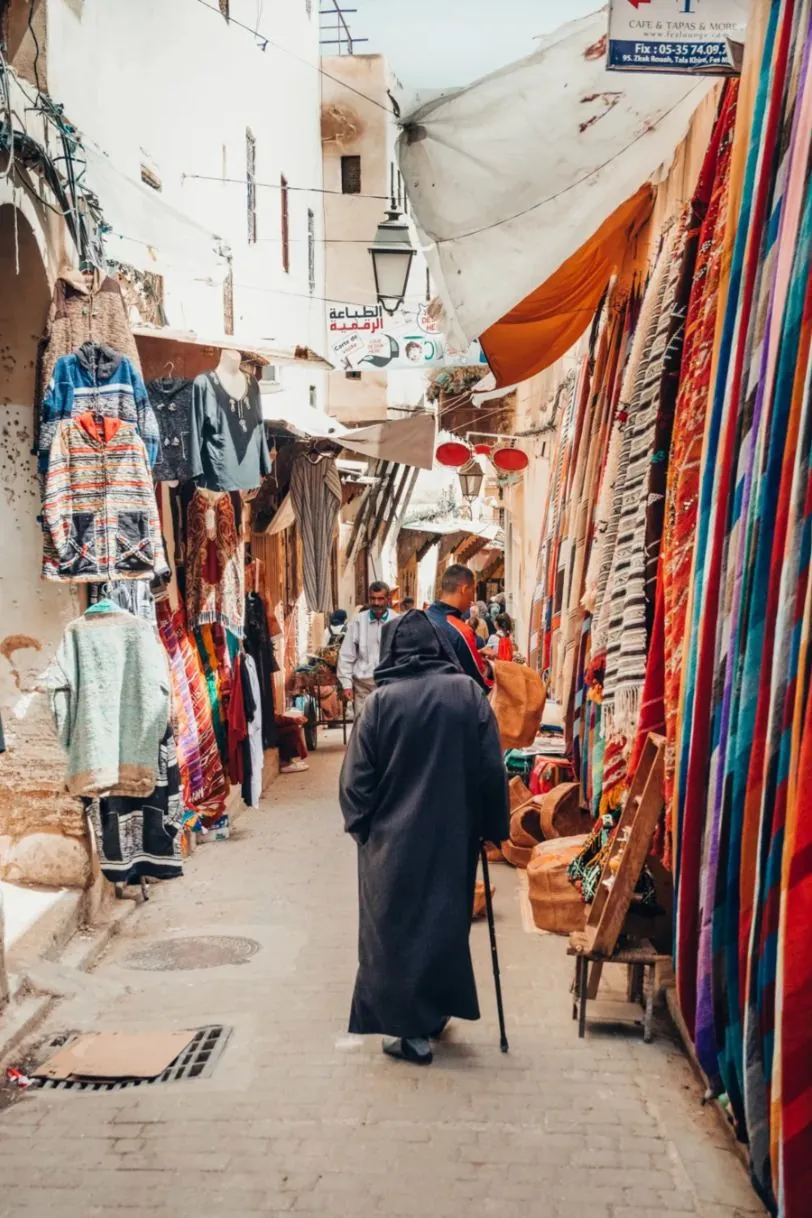
- Your taxi can’t get to the door. Most medinas are car-free. Someone with a trolley will wheel your bag over the cobbles. A soft bag makes their life much easier.
- The door is deceptive. Some of the most beautiful riads in Morocco have the scruffiest doors. Don’t judge.
- Courtyards can be open to the sky. Which is lovely, until it rains in Chefchaouen in February.
Where to stay in riads around Morocco
Marrakech: the most choice by far. Riads near Bab Doukkala, Mouassine or the Kasbah area are a good balance of atmosphere and access.
Fes: some of the grandest historic houses in the country, real palaces with painted ceilings. Fes el-Bali is the place to be.
Chefchaouen and Tetouan: smaller, simpler and very charming, often with views over the rooftops.
The desert and the valleys: here you’ll stay in kasbahs (earthen fortified houses) and desert camps instead, which is a whole other experience. My Sahara guide explains how to pick a camp.
Riads on our tours
On our Morocco group tour we stay in boutique riads in Marrakech, Fes, Chefchaouen and Tetouan, a kasbah guesthouse in the Draa Valley, premium desert camps, and boutique hotels in Tangier and Casablanca. With a maximum of 8 guests we can actually fit into the small, beautiful places, which is one of the big reasons we keep the group small. More on that in my guide to small group tours of Morocco.
I’ve slept in more riads than I can remember, and the ones we choose are where the welcome is as beautiful as the courtyard. Ask me anything about where we stay.
Frequently asked questions
What is the difference between a riad and a dar?
Strictly speaking, a riad has an interior garden, traditionally with four planted beds and a fountain, while a dar is a house with a simple open courtyard and no garden. In practice, many guesthouses use the names loosely, and both offer a similar experience.
Are riads only in Marrakech?
No. Marrakech has the most, but there are beautiful riads in Fes, Chefchaouen, Tetouan, Rabat, Essaouira and Tangier. Fes in particular has some of the grandest historic houses in the country.
Can you eat dinner at a riad?
Breakfast is almost always included and usually excellent. Many riads also cook dinner on request, which is often some of the best food you’ll have in Morocco. Book it in the morning so they can shop for it.
Do riads serve alcohol?
Some do and some don’t. Many smaller riads don’t have a licence, and some allow you to bring your own. If a glass of wine with dinner matters to you, ask before you book.
Are riads suitable for people with limited mobility?
Often not. Most have steep, narrow stairs and no lift, and many are reached on foot down lanes cars can’t enter. If mobility is a concern, ask for a ground-floor room and check how far the riad is from the nearest car drop-off.