Planning a Trip to Morocco: An Honest Guide From Someone Who Lives Here
How long to go for, which route actually works, what it costs and the mistakes I see people make every single week.
 By Bijan Paul, founder & tour leader
Updated · 11 min read
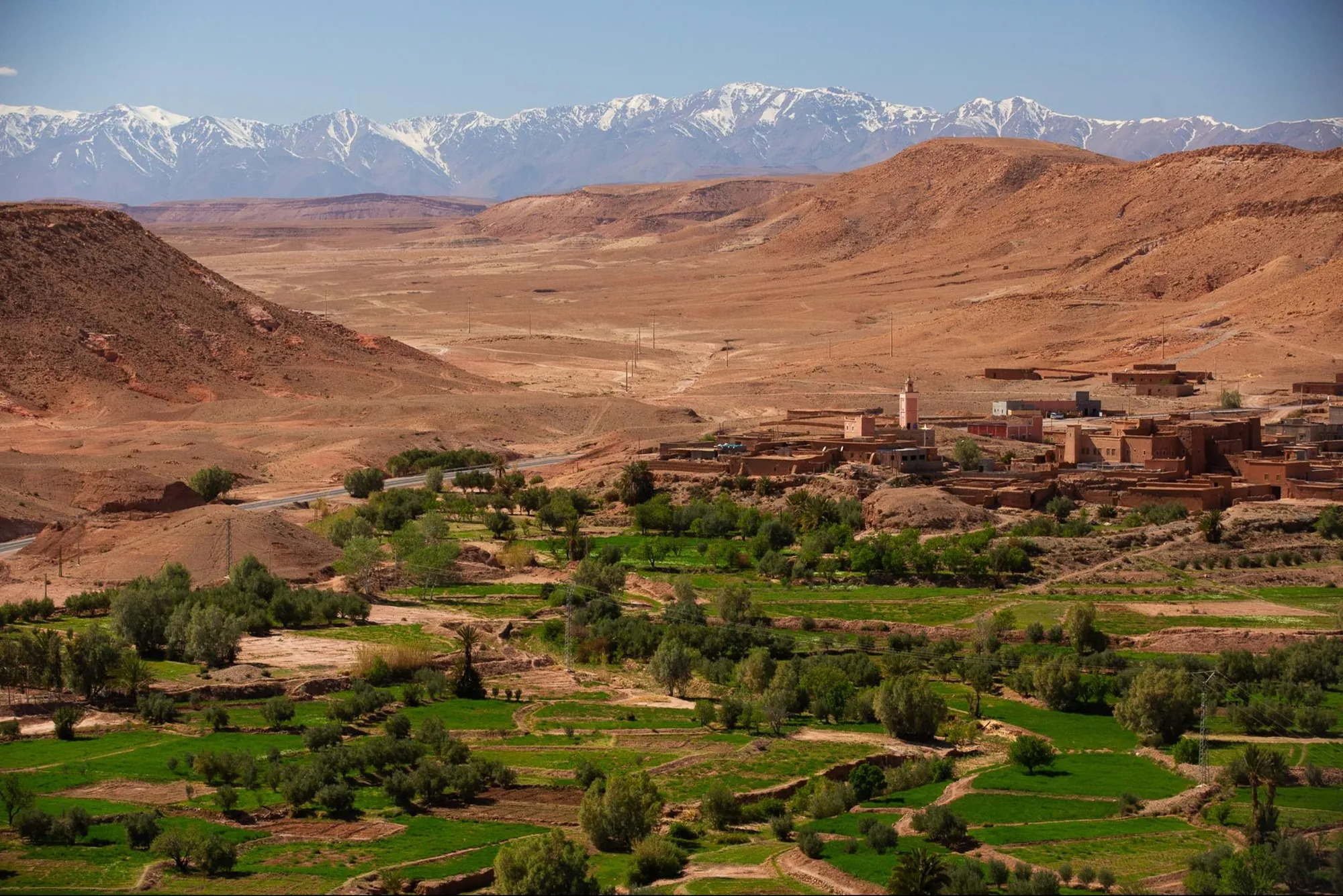
To plan a trip to Morocco, give yourself 10 to 14 days, travel in spring or autumn, and follow a loop that doesn’t double back: Marrakech, over the High Atlas to the Sahara, then north to Fes, Chefchaouen and Tangier. Book the small desert camps and riads early, budget around £250 to £350 a day for comfortable travel, and go with someone who knows the country and its people.
I’ve been planning trips around Morocco for over 15 years, first for friends, then for private clients, and now for our own small group tours. I live here part of the year. I’ve also visited 115 countries, so I’ve made most travel mistakes at least once. If you’re planning a trip to Morocco and feeling slightly overwhelmed, that’s completely normal. This is the guide I wish someone had handed me the first time.
Step 1: Decide how long you’ve got
Everything else follows from this. Morocco looks small on a map. It isn’t. Marrakech to the Sahara is a full day’s drive over the High Atlas, and the desert to Fes is another one. People try to squeeze it all into a week and come home having mostly seen the inside of a minivan.
Here’s roughly what works:
- 4 to 5 days: Marrakech, a day in the Atlas Mountains, maybe a night on the coast. Don’t try to do the desert. You’ll regret it.
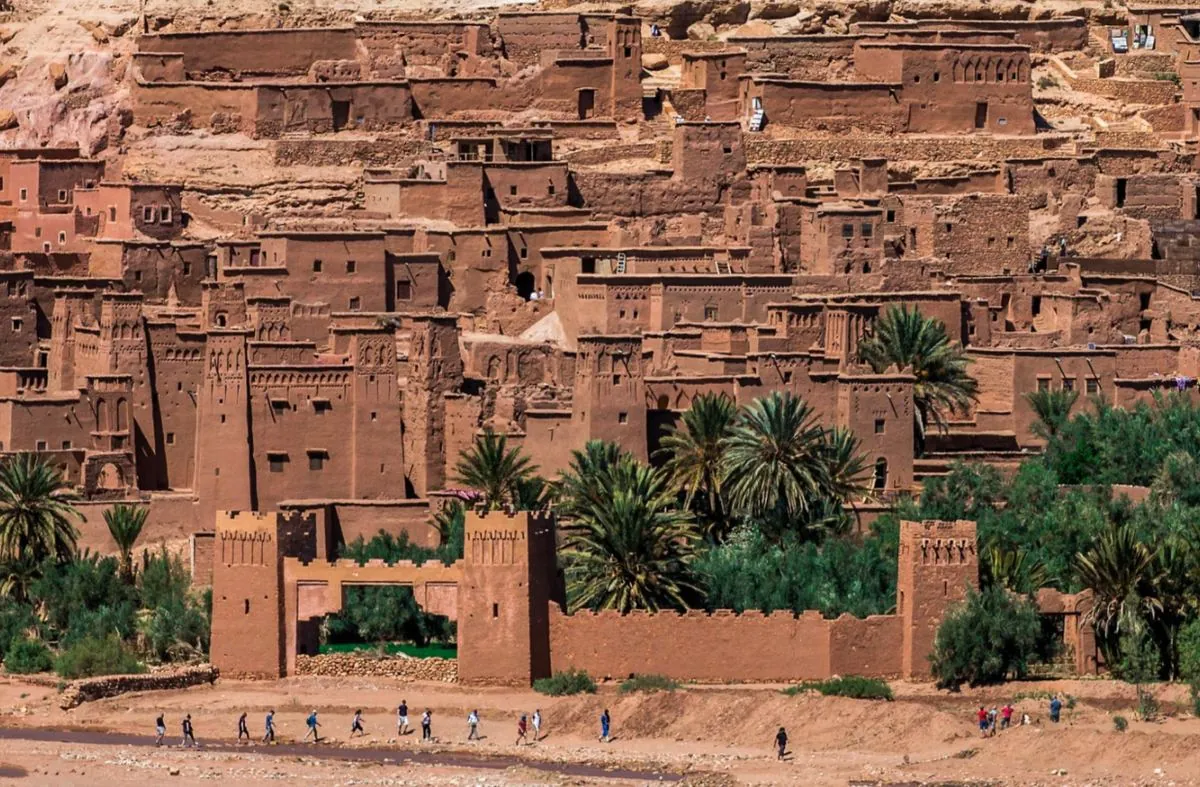
- 7 to 8 days: Marrakech, over the Atlas to Aït Ben Haddou, two nights in the Sahara, then on to Fes. Tight, but it works.
- 10 to 14 days: the full loop. Marrakech, the desert, Fes, Chefchaouen and the north. This is the trip most people actually mean when they say “I want to see Morocco”.
- Three weeks or more: add the Atlantic coast, a few days walking in the mountains, or slow down and stay longer everywhere. Lucky you.
If you only remember one thing from this article: fewer places, more nights. Two nights somewhere is a holiday. One night everywhere is a logistics exercise.
Step 2: Pick a route that doesn’t double back
The classic mistake is flying into Marrakech, going to the desert, coming all the way back to Marrakech, then going up to Fes. That’s two days of driving you didn’t need. Morocco works best as a loop or a line.
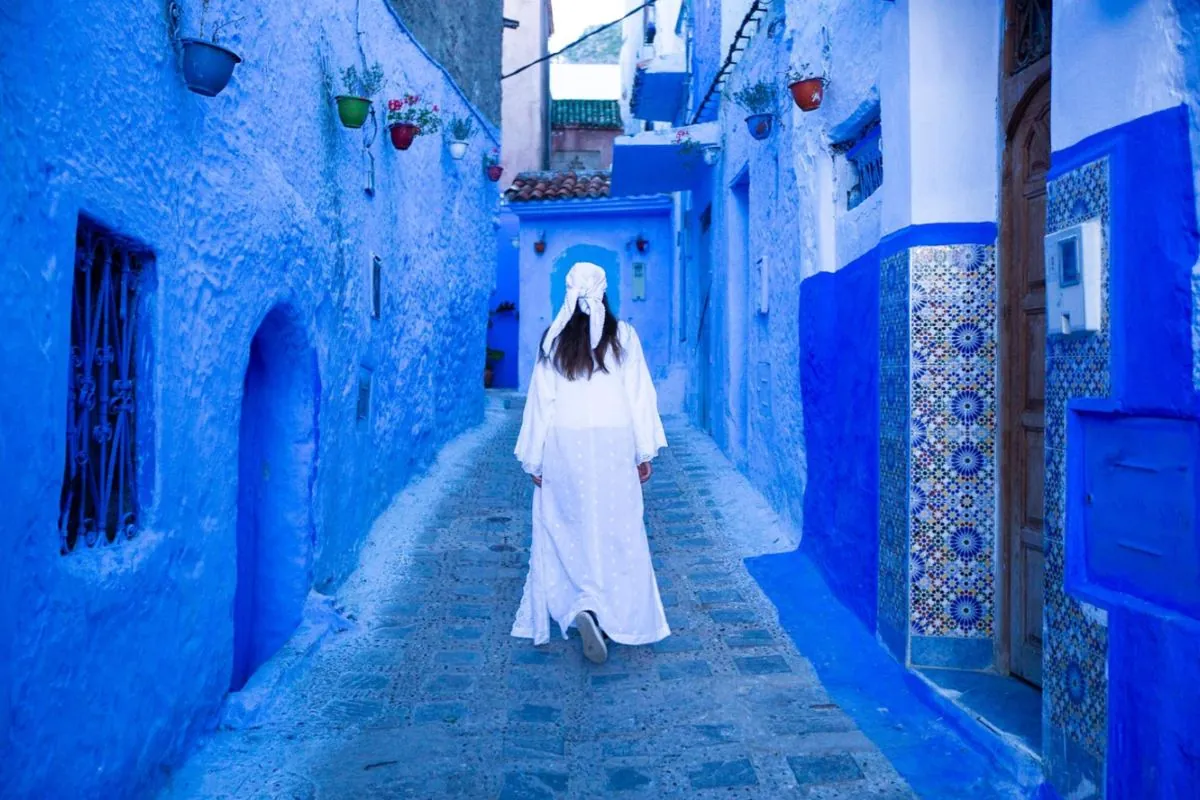
A good route for a first trip goes Marrakech, over the High Atlas, down the Draa Valley, into the Sahara, up to Fes, across to Chefchaouen and on to the north coast at Tangier. From there you can come back down the Atlantic coast, or simply fly home from Tangier. It’s the route we use on our own 12-day Morocco group tour, and it’s the one I’d give my mum. I’ve broken it down day by day in my 12-day Morocco itinerary.
Rough driving times, so you can plan your days:
| Route | Driving time |
|---|---|
| Marrakech to Aït Ben Haddou | 3.5 to 4 hours |
| Marrakech to Merzouga (Sahara) | 9 to 10 hours |
| Merzouga to Fes | 7 to 8 hours |
| Fes to Chefchaouen | 3.5 to 4 hours |
| Chefchaouen to Tangier | 2.5 to 3 hours |
| Tangier to Casablanca (high-speed train) | about 2 hours |
Those are real driving times with a sensible driver, not what the map app promises. Add stops for photos, mint tea and the inevitable goat on the road.
Step 3: Choose when to go
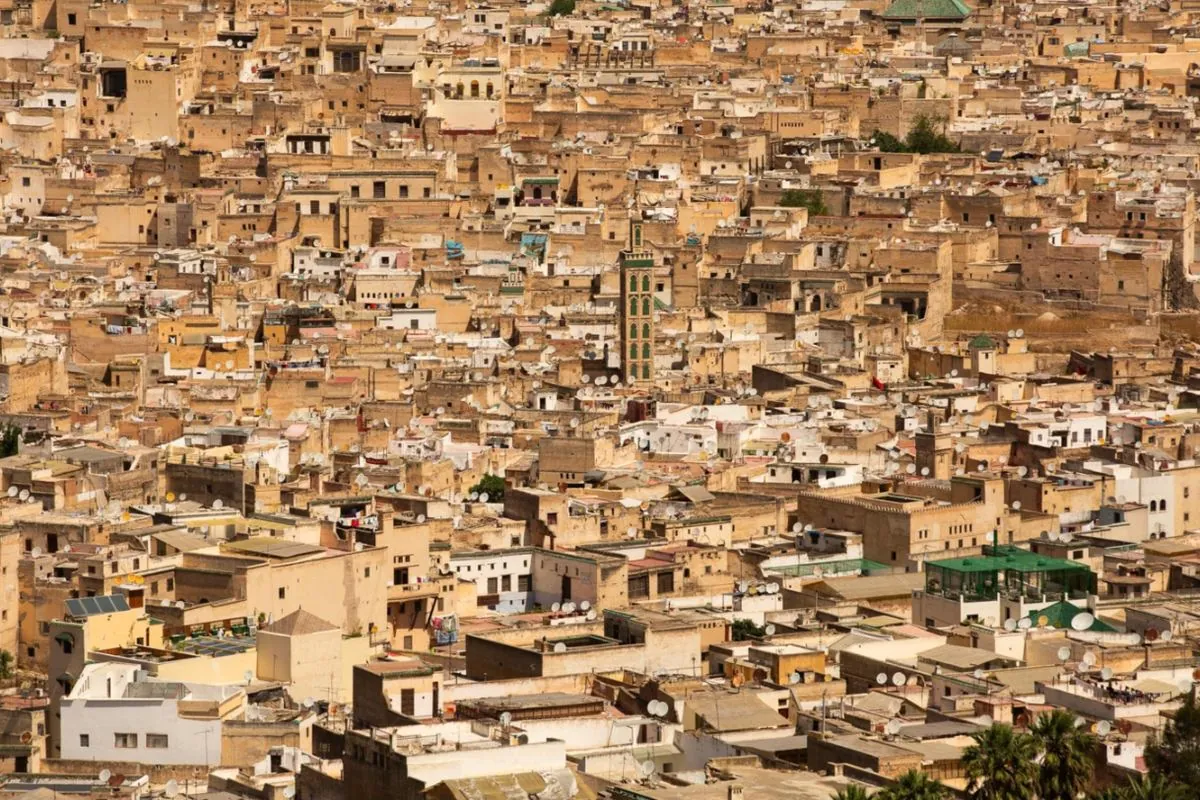
Spring (March to May) and autumn (September to November) are the best times to visit Morocco. Summer is hot, properly hot, especially in Marrakech and the desert, where it regularly goes over 40°C. Winter is lovely in the cities during the day, but desert nights drop close to freezing and the high Atlas passes can close with snow.
Ramadan moves about eleven days earlier every year. In 2027 it falls roughly from early February to early March. It’s a fascinating time to visit, just expect shorter opening hours and quieter days. I’ve written a full month-by-month guide to the best time to visit Morocco if you want the detail.
Step 4: Work out your budget
It depends almost entirely on where you sleep and how you get around. Food is cheap. A tagine in a local café is a few pounds, a nice dinner on a rooftop maybe £25 to £40 a head. Petrol, entrance tickets and mint tea won’t break the bank.
The big costs are:
- Accommodation. This is where most of the budget goes. Riads range from simple family guesthouses to beautifully restored palaces, and the difference in price is big. You get what you pay for, especially in the desert.
- Transport. A private driver with an air-conditioned vehicle is the best money you’ll spend in Morocco. Budget around £150 to £200 a day for the car and driver.
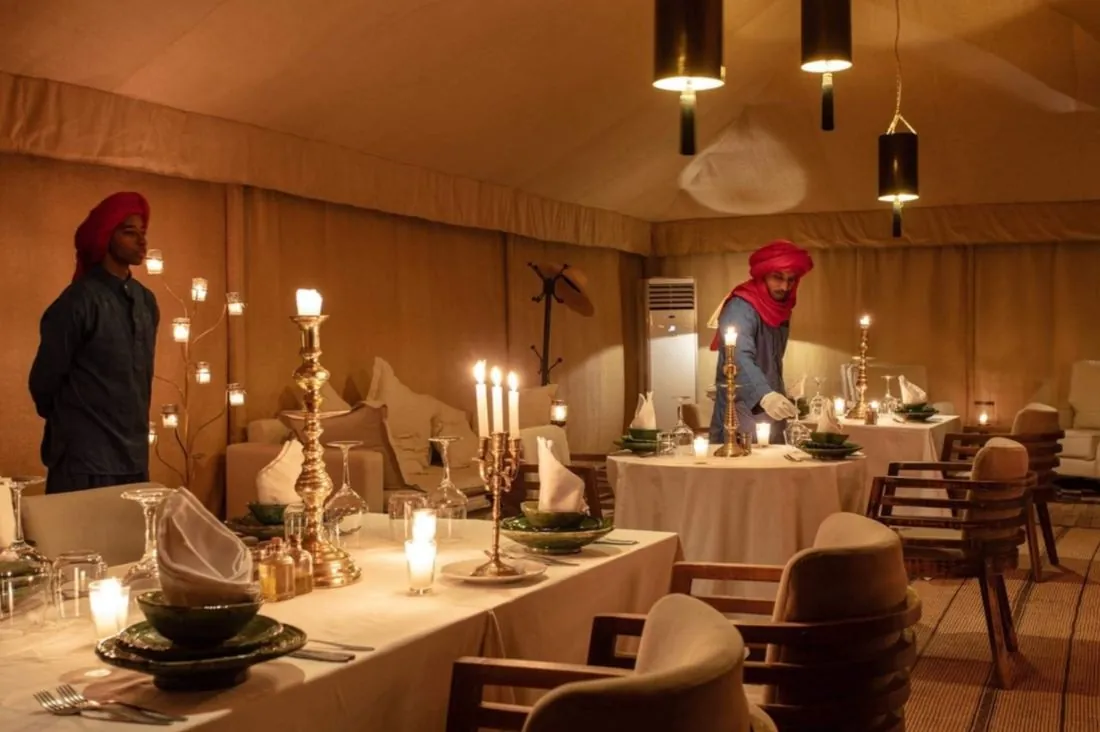
- The desert. A good camp, with real beds, private bathrooms and decent food, is a different world from the cheap ones. Worth every penny.
- Guides. A licensed local guide in Fes or Marrakech for half a day is good value and saves you hours of being lost (and a few “my cousin has a carpet shop” conversations).
For comfortable, well-organised travel with good hotels, a driver and guides, most people spend somewhere between £250 and £350 per person per day. Backpackers do it on a fraction of that. A small group tour usually works out cheaper than doing the same trip privately, because you’re sharing the vehicle and the guides.
Step 5: Sort the paperwork
Visas: UK, EU, US, Canadian and Australian passport holders can visit for up to 90 days without a visa. Make sure your passport is valid for your whole trip and has a blank page for the entry stamp. Rules change, so check your government’s travel advice before you book.
Vaccines: nothing compulsory for most travellers. Hepatitis A and tetanus are commonly recommended. Ask your GP or a travel clinic.
Insurance: get it. Always. Make sure it covers what you’re actually planning to do, including any trekking or camel riding.
Step 6: Decide how you want to experience it
You can hop between the big cities by train easily enough (the high-speed line from Tangier to Casablanca is faster than most trains in the UK, and I’m not bitter). But that’s not the Morocco I fell in love with.
The real Morocco is in between. It’s the silence of the desert at night, the mountain villages where someone always insists you stay for tea, the quiet coastal towns most visitors never reach, and most of all the people. Finding that takes local knowledge: which camp is magical and which is a sad tent next to a car park, which family runs the kasbah, which café owner will still be telling you stories an hour later. That’s what we bring.
And not all tours are equal. A coach tour of Morocco with 40 people is a very different holiday from a small group tour of 8. I wrote a whole piece on that, because it matters more than people think.
Step 7: Book early
The best places in Morocco are small, which means they go first:
- Desert camps. The good ones have a handful of tents and fill up months ahead in spring and autumn.
- Riads. The most beautiful ones in Marrakech and Fes often have only five or six rooms. Not sure what a riad is? Here’s my guide to riads.
- Small group tours. With a maximum of 8 people, places on ours are limited too.
- Flights. Marrakech is the easiest arrival, with direct flights from most of Europe.
Step 8: Get your money and phone sorted
Money: the dirham is a closed currency, so you can’t really buy it before you arrive. Use ATMs at the airport or in town, and carry cash for small cafés, taxis, tips and the souks. Cards work in most good hotels and restaurants. Let your bank know you’re travelling, unless you enjoy calling them from a rooftop at midnight.
Phone: an eSIM or a local SIM from Maroc Telecom, Orange or Inwi at the airport is cheap and the coverage is surprisingly good, even in a lot of the desert. Download offline maps before you arrive. Medinas laugh at GPS.
Language: Moroccan Arabic (Darija) and Amazigh (Berber) languages are spoken everywhere, French is widely used, and English is common in tourist areas. “Salam” (hello) and “shukran” (thank you) go a long way.
Step 9: Pack properly
- Layers. It can be 30°C at lunch and 10°C in the desert at night. Yes, in the same day.
- Modest clothes. Shoulders and knees covered is a good rule in the medinas and smaller towns. Light, loose and long is cooler anyway.
- Comfortable shoes. Medina streets are uneven, and you’ll walk more than you think.
- A soft bag rather than a huge suitcase. Many riads are down lanes cars can’t reach, and someone will be wheeling your case over cobbles.
- Sunglasses, a hat and a scarf. The scarf doubles as sun cover, dust cover in the desert and a respectful cover-up for women visiting religious sites.
Where to stay in Morocco
Where you sleep shapes a Moroccan trip more than almost anything else, so it’s worth getting right.
- Marrakech: a riad inside the medina for atmosphere, ideally near a gate so taxis can get close. If you want a pool and space, look at the Palmeraie or the Hivernage, but you’ll lose the magic of walking out into the souks.
- Fes: stay in Fes el-Bali, the old medina. Some of the riads here are real palaces with painted ceilings, and they cost a fraction of what they would in Marrakech.
- The desert: a small camp well away from the others. This is the one place not to save money. My Sahara guide explains what to look for.
- The valleys and mountains: kasbahs and family-run guesthouses, often with views that make you forget to unpack.
- The north: small riads in Chefchaouen and Tetouan, and boutique hotels in Tangier with terraces over the Strait of Gibraltar.
What to eat
Moroccan food is one of the best reasons to go, and it’s much more than tagine (although you will eat a lot of tagine, and you won’t complain). A few things to look out for:
- Tagine in endless versions: chicken with preserved lemon and olives, lamb with prunes and almonds, kefta with eggs.
- Couscous, traditionally eaten on Fridays after midday prayers.
- Pastilla, a flaky pie of pigeon or chicken with almonds, cinnamon and sugar. Sounds odd, tastes brilliant.
- Harira, a rich tomato and lentil soup, especially during Ramadan.
- Msemen and baghrir (Moroccan pancakes) with honey and amlou, a spread of argan oil, almonds and honey, at breakfast.
- Mint tea. Sweet, poured from a height, and offered everywhere. Saying yes is part of the experience.
Street food in busy places is generally fine. Start gently for the first couple of days, go easy on salads washed in tap water, and you’ll be eating like a local by day three.
Can you combine Morocco with Spain or Portugal?
Easily, and it makes a brilliant trip. Ferries cross from Tarifa to Tangier in about an hour, and there are cheap flights between Marrakech, Fes, Tangier and most of Spain and Portugal. A week in Andalucía followed by ten days in Morocco is one of my favourite combinations. Seville, Granada and the Alhambra, then over the water to Tangier, Chefchaouen and down to the desert. You see the same history from both sides.
Travelling with kids
Morocco is very family-friendly. Children are adored here and you’ll find people go out of their way to help. Kids generally love the camels, the desert, the souks and the food (mostly the bread). Keep driving days short, build in pool time, and choose riads with safe stairs and no unguarded plunge pools for little ones.
The mistakes I see every week
- Trying to do Marrakech to Merzouga and back in two days. You will see the dunes for roughly the length of a sunset and then go to bed.
- Only staying in the medina. Medinas are magical. They’re also noisy, busy and full of motorbikes. Mix in somewhere quieter.
- Overpacking the itinerary. The best moments in Morocco happen when nothing is planned. Mint tea with a shopkeeper, a long lunch, a wrong turn.
- Following the friendly man who says the square is closed. The square is not closed. It is never closed.
- Skipping the north. Chefchaouen, Tetouan and Tangier are some of my favourite places in the country, and most first-time visitors never go.
Is Morocco safe?
Yes, Morocco is a very welcoming country and millions of people visit every year without any problems. The main hassle you’ll face is persistent selling in the souks and the odd unofficial “guide”. Be polite, be firm, keep walking. Use common sense at night as you would anywhere. Women travelling alone may get more attention than they’d like, especially in Marrakech, and dressing modestly does help. There’s plenty more on all of this in my Morocco travel tips.
My honest advice
Don’t try to see everything. Morocco isn’t going anywhere. Pick a route that flows, sleep somewhere beautiful, leave gaps in the day, and give yourself at least two nights in the desert if you can. That’s where people fall in love with this country.
It’s how I like to travel too. I’d rather spend longer in fewer places, take my time, and really appreciate somewhere with a good group of people around me. You feel the beauty of a place so much more when you’re not rushing to the next one, and when you’ve got people to share it with over dinner that night.
Better still, come and see it with me. Our Morocco Signature Journey is everything I love about this country in twelve days: the desert, the mountains, the coastal towns and, most of all, the people. Small group, max 8, no planning needed. Send me a message and ask me anything.
Frequently asked questions
How many days do you need in Morocco?
Ten to fourteen days is the sweet spot for a first trip. A week covers Marrakech, the High Atlas and a night or two in the desert. If you want Fes, Chefchaouen and the north as well, you need closer to twelve days, or you’ll spend the whole holiday in a car.
How much does a trip to Morocco cost?
It can be as cheap or as expensive as you like. Food, taxis and entrance fees are good value, but good boutique riads, private drivers and a proper desert camp are where the money goes. For comfortable, well-organised travel, budget roughly £250 to £350 per person per day.
Do I need a visa for Morocco?
UK, EU, US, Canadian and Australian passport holders don’t need a visa for tourist stays of up to 90 days. Your passport needs to be valid for your whole stay, and it’s worth checking your government’s travel advice before you book, as rules can change.
What vaccines do you need for Morocco?
No vaccinations are compulsory for most travellers. Many doctors recommend being up to date with routine jabs plus hepatitis A and tetanus. Speak to your GP or a travel clinic about six to eight weeks before you go.
Is it better to do a tour or travel independently in Morocco?
You can get around the big cities on your own, but the real Morocco, the desert, the mountain villages, the quiet coastal towns and the people, is much easier to reach with someone who knows it well. A small group tour gives you that local knowledge and those connections without being herded around with forty strangers.
Can you combine Morocco with Spain?
Yes, easily. Ferries cross the Strait of Gibraltar from Tarifa and Algeciras to Tangier in about an hour, and there are cheap flights between Morocco and most Spanish cities. Andalucía and northern Morocco make a brilliant combination.